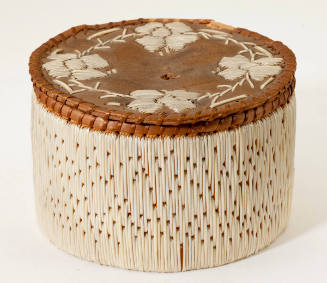


Lidded Box
Culture
Mi'kmaq
Dateabout 1840–1850
Mediumbirch bark, porcupine quills, natural dyes
Dimensions15.2 x 22.9 x 22.9 cm (6 x 9 x 9 in.)
ClassificationsCanework
Credit LineGift of John H. and Dorothy Shea in memory of their daughter, Eileen Shea Spingler
Object number1998.176
Label Text"When we create art, it's more than just making something. We're sharing our language, stories, life lessons, and tribal knowledge."- Jennifer Pictou, Mi'kmaq Nation, Presque Isle, Maine (2020)
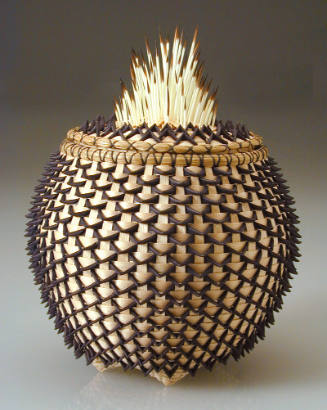
The Mi'kmaq tribes of present-day northern Maine and Canada's Atlantic provinces have long used dyed porcupine quills to create elaborate decorations on their clothing and other items. In the mid-18th century, the women who created quillwork adapted their art for trade and, later, tourism. Boxes such as this, made of birch bark covered in geometric quillwork designs, were particularly popular with Western consumers.
Passed down from one generation to the next, quillwork is a labor-intensive process involving preparing the quills and stitching them individually into the object's surface. By the late 19th century, this artform was threatened by the decimation of Mi'kmaq populations and the residential school systems that removed Indigenous children from their families and suppressed their Native cuture. In recent years, Mi'kmaq artists have been revitalizing quillwork traditions.ProvenanceHurst Gallery, Cambridge, MA; John H. and Dorothy Shea; to Worcester Art Museum, 1998
On View
On viewCurrent Location
- Exhibition Location Gallery 3003