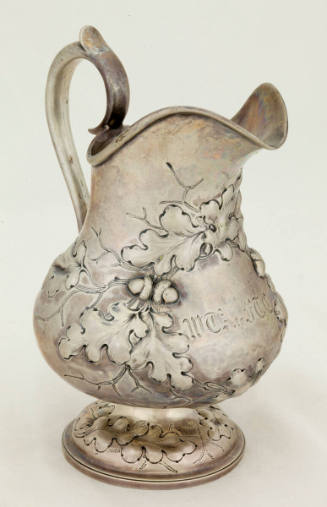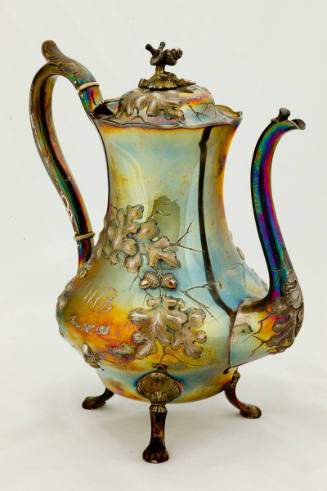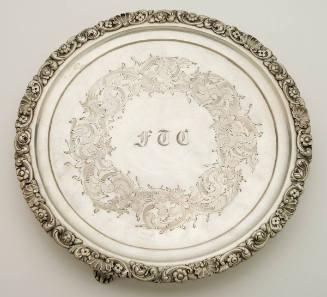


Sugar Bowl
Artist
Jones, Ball & Co., American, 1852–1853
American, founded 1796
Date1852–1853
Mediumsilver
Dimensions16.5 x 10.8 cm (6 1/2 x 4 1/4 in.)
ClassificationsMetalwork
MarkingsEngraved: W C F June 30th 1828 on body. Mark on bottom: JONES, BALL & CO., and Boston and PURE COIN in rectangles. JONES SHREVE BROWN & CO., stamped over original marks.
Credit LineBequest of Stephen Salisbury III
Terms
Object number1907.240
DescriptionDecoration of acorns and oak leaves repousse. Four feet, acorn and twig finial on cover, two handles.Label TextFrom the colonial era through 1900, Americans avidly acquired silver items to display their wealth. This precious metal had profound social and ecological repercussions across the Atlantic world. The majority of silver used throughout this period originated in Spanish-controlled mines in Latin America. Potosi in present-day Bolivia was the major source through the mid-1700s, when its mines were exhausted and Mexico became a leading supplier. Mining relied on forced labor, subjecting both Indigenous and African populations to horrific working conditions. It also depleted natural resources and devastated the local environment with pollution. One 1759 writer described the cloud hanging over Potosi as:"...vapors and poisonous fumes...from dead animals, from trash heaps, and other fine dust from the ore and from the mercury smoke in the burning and reburning of the [silver]."ProvenanceStephen Salisbury, Worcester, MA
On View
On viewCurrent Location
- Exhibition Location Gallery 3000.1