

Conservation Status: After Treatment
Spear
Conservation Status: After Treatment
Image © Worcester Art Museum, all rights reserved.

Spear

Datelate 1800s
Mediumiron, wood
Dimensions182.9 cm (72 in.)
ClassificationsArms and Armor
Credit LineGift of Mrs. Frank E. Heywood
Object number1917.10.2
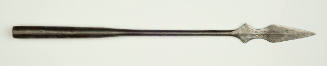
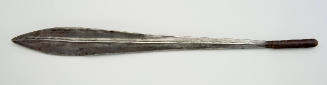
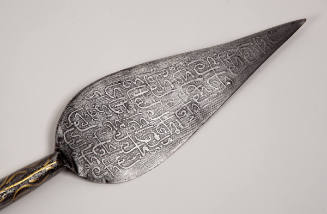
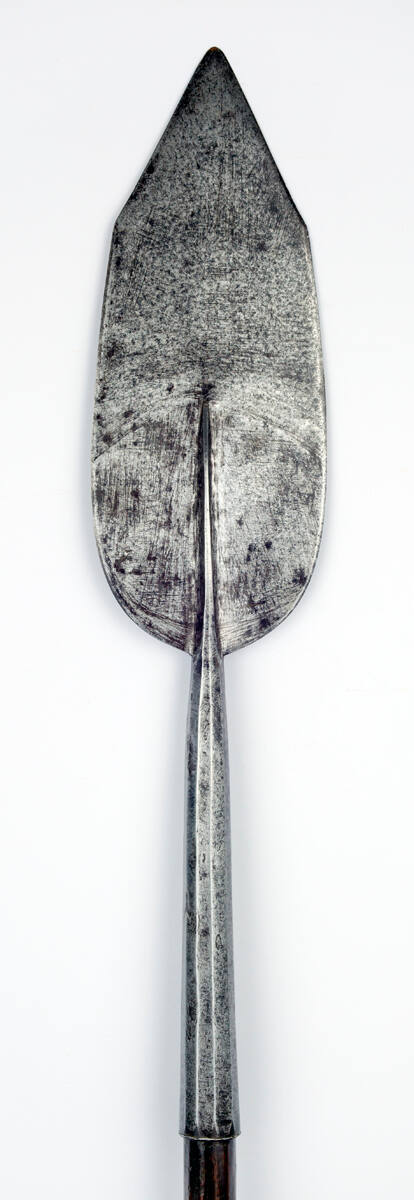
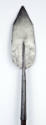
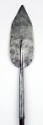
DescriptionLong shaft with spatulate iron butt-spike. Broad leaf-shaped head of sheet iron with faceted socket.Label TextIn much of Africa, the spear was the main weapon for battle, usually in conjunction with a shield. Different styles of heads, butt-caps, and wrapping on the shaft help identify the spear’s regional origin. The symbolic importance of spears and shields in African cultures is reflected in their appearance on the flags of Kenya and Eswatini (Swaziland).
On View
On view
Current Location
  • Exhibition Location   Gallery 2204
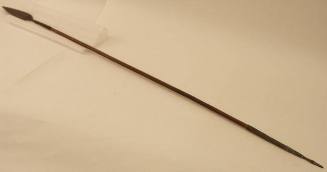
Image © Worcester Art Museum, all rights reserved.
Eastern African
late 1800s
Image © 2025 Worcester Art Museum, all rights reserved.
Eastern African
late 1800s
Image © 2025 Worcester Art Museum, all rights reserved.
Maasai people, Eastern African
late 1800s
Image © Worcester Art Museum, all rights reserved.
Maasai people, Eastern African
late 1800s
Conservation Status: After Treatment
Maasai people, Eastern African
late 1800s
Conservation Status: After Treatment
Maasai people, Eastern African
late 1800s
Reference Image - Not for Reproduction
Congo Region, Central African
late 1800s-early 1900s
Spear
Eastern African
late 1800s
Spearhead
Maasai people, Eastern African
late 1800s-early 1900s
Ol alem (sword)
Maasai people, Eastern African
early 1900s
Conservation Status: After Treatment
Congo Region, Central African
late 1800s
Side B
Northern African
1800s