



Katana (sword)
Artist
Suishinshi School
Culture
Japan
Datelate 1700s–early 1800s
Mediumsteel, iron, copper, ray skin (same), wood, silk, gilding
Dimensions107 × 8.5 cm (42 1/8 × 3 3/8 in.), 3 lb, 10 oz (weight)
ClassificationsArms and Armor
Credit LineThe John Woodman Higgins Armory Collection
Object number2014.40
DescriptionVery plain tsuba adorned with fine concentric circles, rim with traces of gold inlay. Rather wide, simple hamon. Gilded shakudo menuki in the form of daw-like birds on gourds. Fuchi and kashira with geometric pattern. Fittings are evidently composited with the sword.Blade length: 30"Label TextFor the Japanese, the sword was the “soul of the samurai.” To these noble warriors belonged the exclusive privilege of carrying a pair of swords (daisho), consisting of the long katana and the shorter wakizashi, both worn tucked into the waist-sash.
The katana was the primary fighting sword, while the wakizashi served as a secondary weapon, and as the instrument for ritual suicide (seppuku). The katana and wakizashi combination was developed by samurai for use on foot, in contrast to older styles of sword designed for mounted use.
Swords like these were made in a highly complex process that involved folding different types of steel into multiple layers, then tempering the metal to achieve the perfect balance of a hard, sharp edge with a durable body. The temper line, or hamon, can be seen as an irregular wavy line that runs between the cutting edge and the thicker body of the blade.
ProvenancePurchased by Museum at the Morosini sale #3986 at the American Art Association (NYC), October 10-15, 1932, lot #144.
Collection transfer from Higgins Armory, January 2014.
On View
Not on view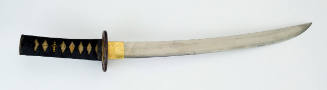
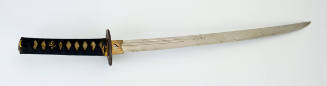
Japanese
blade: 1416; mountings: early 1800s



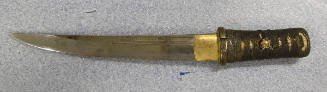


1600s, with later mountings
1600s, with later mountings
1600s, with later mountings
1600s, with later mountings
