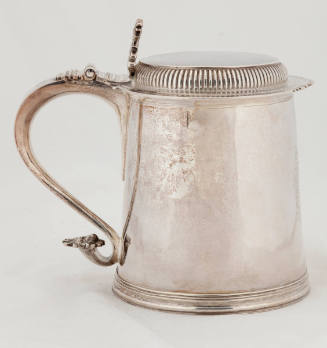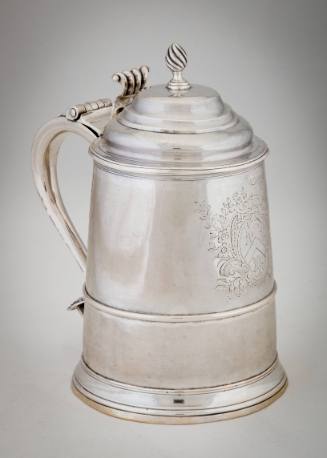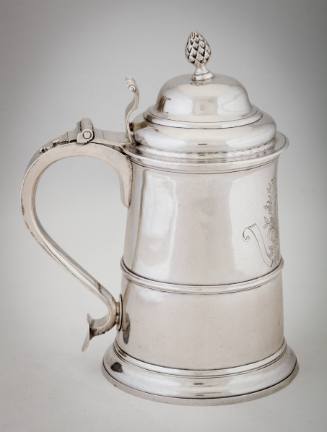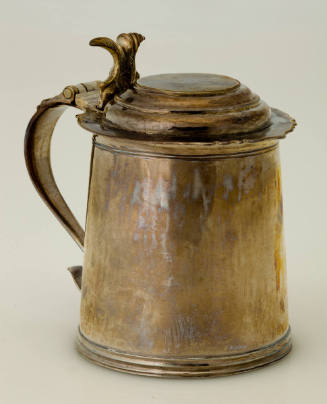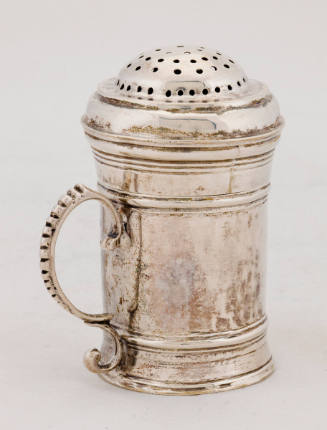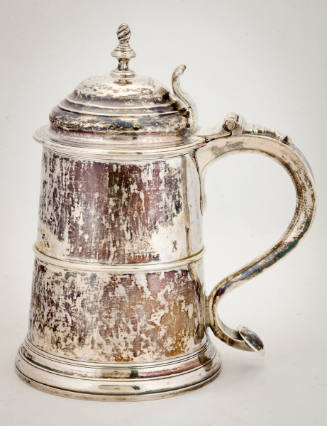


Silver Tankard
Artist/Culture
Samuel Vernon
American, 1683–1737
Artist/Culture
Newport, Rhode Island
Date1700–1710
Mediumsilver
Dimensions18.4 × 19.1 cm (7 1/4 × 7 1/2 in.)
ClassificationsMetalwork
Markingsto left of handle and on top; 'SV/silver mark' within a heart
Credit LineBequest of Stephen Salisbury III
Object number1907.116
DescriptionStraight sloping sides. Cut card work at bottom. Moulded top with plain finial thumb piece. Two dolphins and a mask, fluted scroll handle, end piece a shield with a bust of a boy. Drop on body.Label TextIn the tradition of European craft guilds, silversmithing was a regulated trade in colonial America. Only master artisans who had completed a seven-year apprenticeship and additional training as independent journeymen could run their own workshops. They, in tunr, hired apprentices and journeymen to help produce items. Some master smiths, including Samuel Vernon of Newport, Rhode Island, and Thomas Hammersley of New York City, also used enslaved laborers in their shops.Multiple hands likely worked on this tankard and spoon—shaping, casting, soldering, burnishing, and decorating the silver. Yet only Vernon and Hammersley's marks or signatures are stamped on the objects, leaving the other contributors unknown and unacknowledged. This also reflects the Western tendency to privilege the individual artist.ProvenanceStephen Salisbury, Worcester, MA
On View
On viewCurrent Location
- Exhibition Location Gallery 3001