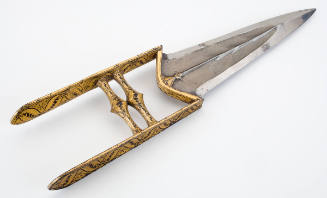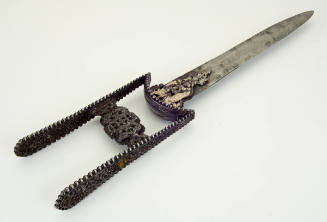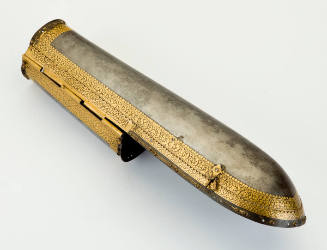

Katar (punch dagger)
Culture
Rajasthani
, northern Indian
Date1700s
Mediumsteel, gold overlay (koftgari)
Dimensions41 × 8.8 cm (16 1/8 × 3 7/16 in.), 1 lb, 2 oz (weight)
ClassificationsArms and Armor
Credit LineThe John Woodman Higgins Armory Collection
Object number2014.64
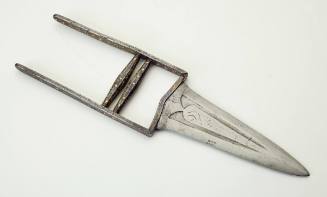
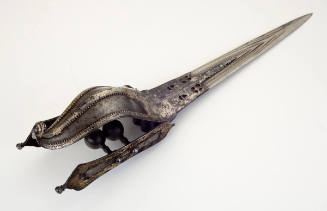
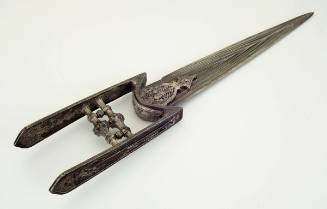
DescriptionSteel triangular blade with heavily reinforced tip. Multiple fullers on both faces, following edges of blade. "H"-shaped hilt covered with gold geometric and floral koft-gari. Two hexagonal section grip bars tapering to side bars. Extra long side bars, flaring slightly to rounded ends.Label TextThe katar, also known as a jamadhar, is a weapon unique to South Asia. It is grasped in the fist by the pair of short bars, so that the blade extends in line with the forearm and hand. It was deadly as a weapon: this example has a stout-tipped blade designed for penetrating armor without breaking. But it was often a fashion statement as well, decorated according to local tastes and tucked into the sash as part of a man's civilian attire.ProvenancePurchased by Museum from American Art Association, Anderson Galleries (NYC), Macomber sale, December 10-12, 1936 (lot 123).Collection transfer from Higgins Armory, January 2014.
On View
On viewCurrent Location
- Exhibition Location Gallery 2204