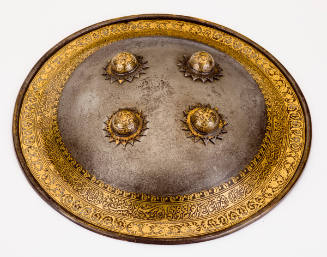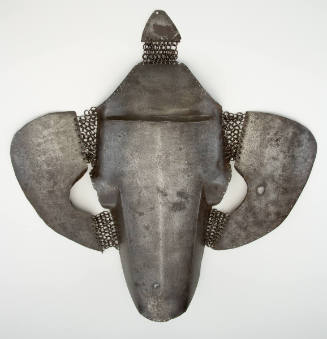
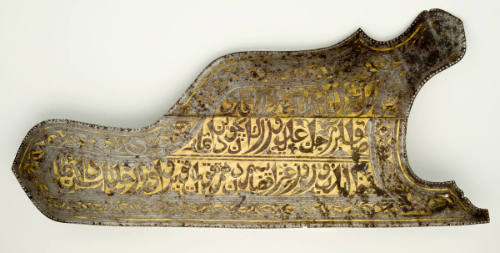


Bow Case Cover
Culture
Ottoman
Datelate 1600s
Mediumiron, gold
Dimensions30.5 × 69 cm (12 × 27 3/16 in.), 1 lb, 14 oz (weight)
ClassificationsArms and Armor
Credit LineThe John Woodman Higgins Armory Collection
Object number2014.65
DescriptionSteel, constructed of two plates, now secured by 3 oval plates riveted inside; 4 older, now inactive rivets probably remain from the original means of attachment. The perimeter is pierced with small stitching-holes, and there is a slow at the uppermost corner for a mounting-strap. Small traces of leather still adhere to the back near the tip.The plates are engraved against a gold ground, the ground punched with massed lines and sets of three (tiger spots); the three inner panels with an inscription in Turkish, the outer register with half palmette and trefoil scroll bordered by narrow registers alternately plain and with stylized guilloche design.Label TextAround the 1400s and 1500s, the Turks built a huge empire that stretched from Arabia to Algeria, and north into eastern Europe. They had originally come from the grasslands of Central Asia, where they had lived as nomadic horse herders. Even after conquering the ancient Roman capital of Constantinople, they preserved many traditions from their nomadic days. One of these was horse-archery. The short horse-bow was holstered at the rider’s right hip, ready for a quick draw across the body. This outstanding gilt cover for the bow-case gave a nomad’s utilitarian accessory the look of imperial splendor.
The inscription asks God to “Protect me on the day of holy war from the arrow of fate and give my arm strength!”
ProvenancePurchased by Museum from American Art Association, Anderson Galleries (NYC), Macomber sale, December 10-12, 1936 (lot 187).
Collection transfer from Higgins Armory, January 2014.
On View
On viewCurrent Location
- Exhibition Location Gallery 2202